

People get Hollywood Regency wrong because they think it is about glamour as decoration. Gold things. Mirrored surfaces. The idea that if you add enough shine, the room becomes something.
That is not what it is.
Hollywood Regency is a design language that emerged in the 1930s, shaped by a very specific set of forces: the golden age of Hollywood, the tail end of Art Deco, and a group of designers who understood that a film set and a living room were doing the same thing. They were both creating a world you stepped into and believed.
William Haines. Dorothy Draper. Billy Baldwin. These were not decorators. They were architects of atmosphere. They understood that a room communicates before anyone speaks. That the materials you put in a space tell a person exactly where they are, and more importantly, who they are while they are in it.
The language they built is precise. Lacquer. Brass. Lucite. Velvet in deep jewel tones. Classical forms stripped to their essence and then given a modern edge. Nothing soft. Nothing tentative. Everything decided.
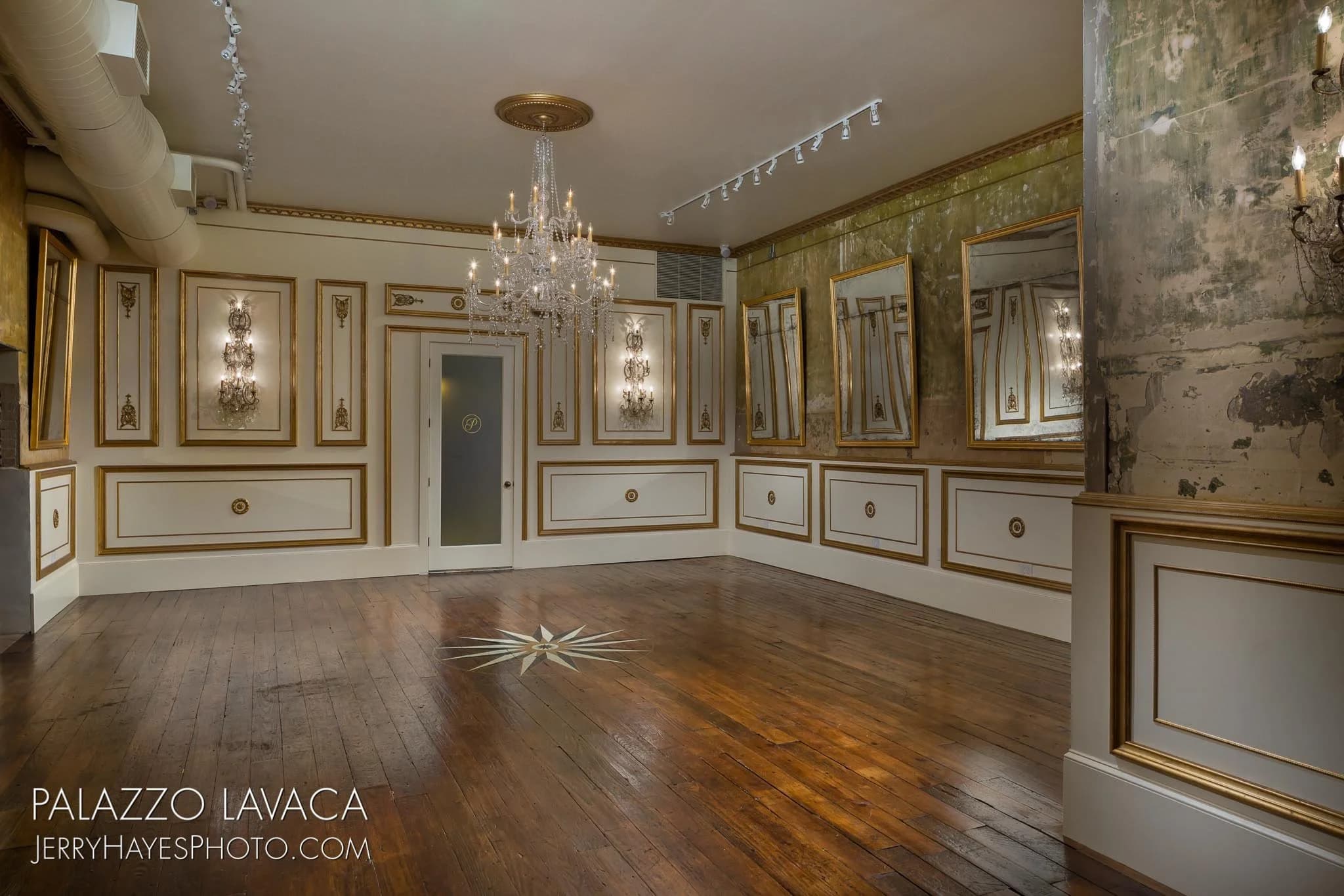
This chandelier from John Richard is the essence of that language. Ten lights. Acrylic arms that move light the way crystal does but with a cleaner, more modern register. Brass hardware that grounds the whole thing in the classical tradition. The scale is significant, 47 inches, which is correct. Hollywood Regency does not do small gestures. The chandelier is the room's first statement. Everything else answers to it.
Part Deco, part Lucite, part brass. All the things.
That combination is not accidental. Deco gave Hollywood Regency its geometry, its belief in the beauty of structure. Lucite gave it modernity, the understanding that transparency and lightness could carry the same authority as crystal without the weight of the past. And brass gave it permanence. Warmth. The thing that keeps a room from feeling cold no matter how architectural it gets.
When I am building a room in this language, I start with the ceiling. Always. The chandelier is not the finishing touch. It is the decision that every other decision answers to. Get the chandelier right and the room has a center of gravity. Everything else falls into place around it.
This is what I mean when I say glamour is a design language. It is a set of principles, a historical conversation, a specific understanding of what materials do to a room when they are chosen with knowledge rather than instinct alone. Hollywood Regency is one of the most sophisticated expressions of that language ever developed. And it has never gone out of style because it was never about style. It was about architecture in the register of beauty.
That is always the point.