

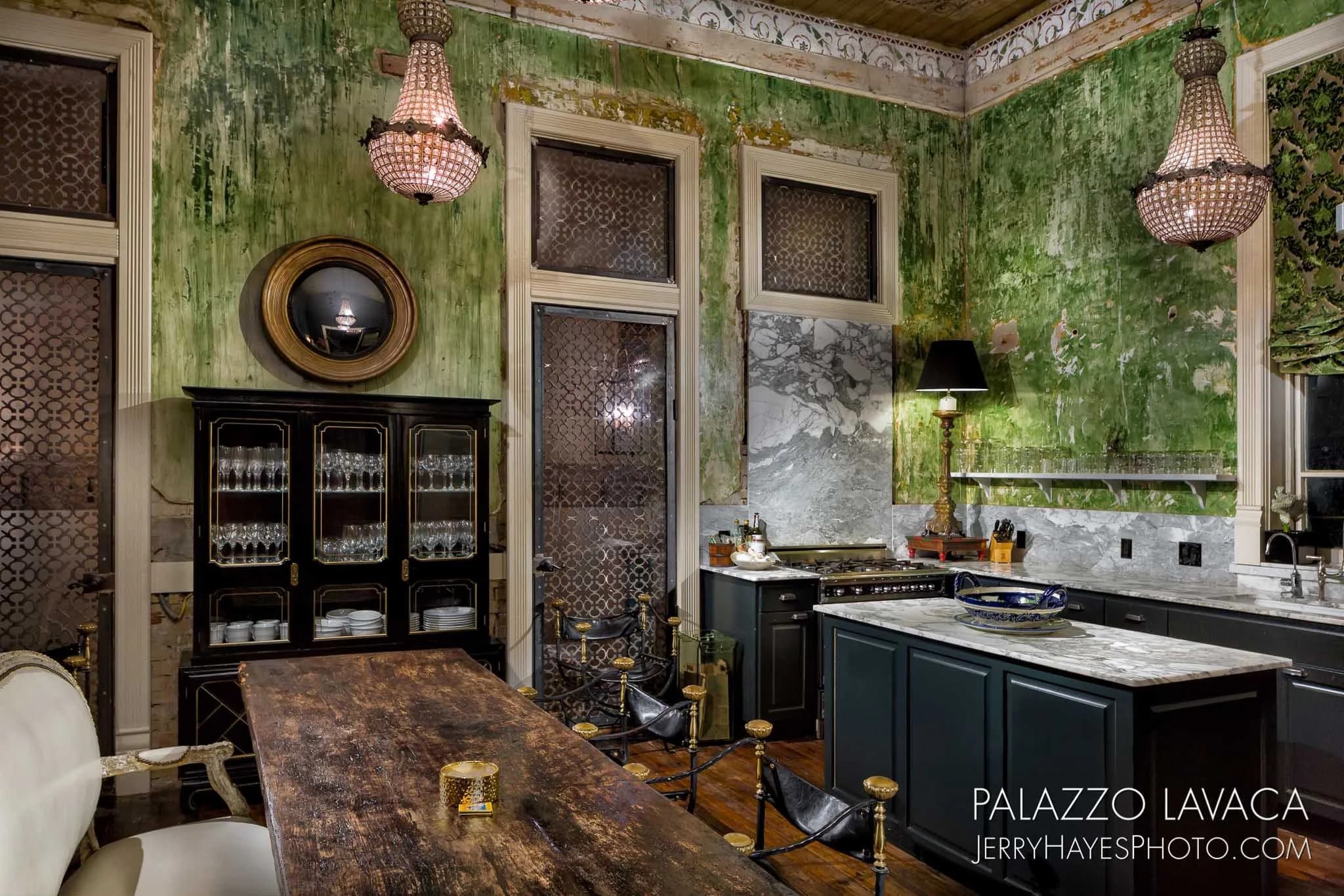
On Lavaca Street in Austin, there is a building that spent most of a century smelling like leather and neatsfoot oil. It belonged to the Steiner family. They made saddles in it. Cowboys, rodeo riders, and ranch hands walked through the door for generations, and the walls held the kind of working life that does not photograph well but matters more than what does.
When I took the building on, I did not strip it. I listened to it.
The plaster walls had been papered and repapered and stripped again, and what was left was a green that no paint store could mix. Patina. Time, doing the work. I kept it. I hung a crystal chandelier in the middle of the room and let it argue with the walls. Crimson velvet at the windows, because the building had earned a little drama. A marble bust on a white commode, because the bust had been waiting somewhere for a room exactly like this one.
This is what glam actually is. Not gold for the sake of gold. Not shine pretending to be substance. Glam is the conversation between something rough and something refined, held in the same room, neither one apologizing for the other.
A saddle shop is honest. A chandelier is honest. Put them in the same room and tell them to behave, and you get Palazzo Lavaca.
The building taught me something I have been using on every project since. Old bones want grand gestures. The grander the gesture, the more the bones can hold. People walked into this room and went quiet, and it was never the chandelier that did it. It was the walls underneath, remembering.